From Numbers to Decisions: Why KPIs Must Begin With Business Goals
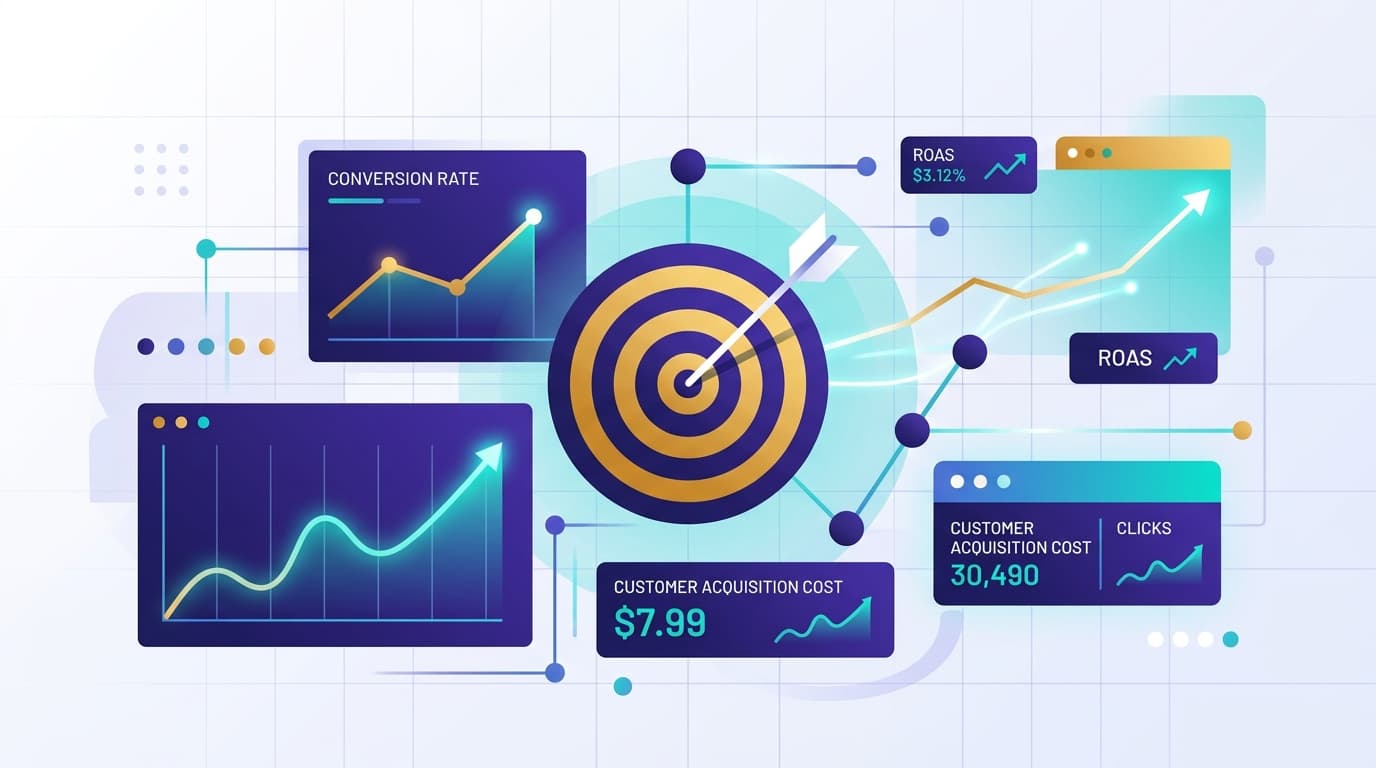
Digital platforms can produce hundreds of measurements, including impressions, clicks, sessions, bounce rates, video views, and conversions. Having more data, however, does not automatically lead to better decisions. Without a clear connection to organizational goals, a dashboard can become a collection of interesting numbers that provides little direction. Key performance indicators solve this problem by focusing attention on the measurements that show whether an organization is making meaningful progress.
A Metric Is Not Automatically a KPI
A metric measures an activity or result. A key performance indicator is a deliberately selected metric that measures progress toward a specific business objective. Every KPI is a metric, but not every metric is important enough to be a KPI.
For example, page views may help describe website activity, but they are not necessarily evidence of business success. If a company's goal is to generate qualified sales opportunities, the number of completed consultation requests may be more useful than total page views. Jackson (2016) explains that useful KPIs should connect organizational goals with measurable performance. This connection allows leaders to understand not only what happened, but whether the result moved the organization in the intended direction.
Google Analytics makes a similar distinction between routine events and "key events." An event may record any interaction, such as viewing a page or clicking a link. A key event represents an action that is particularly important to the business, such as completing a purchase or submitting a lead form (Google, n.d.). The organization's objectives determine which actions deserve that priority.
Begin With the Decision, Not the Dashboard
Effective KPI development starts by defining what the organization wants to accomplish. The organization should then identify the customer behavior that represents progress, select a measurement, establish a target and time frame, and determine what action will be taken when performance changes.
A practical alignment process is:
- Define the business goal.
- Identify the audience behavior connected to that goal.
- Select a KPI that measures the behavior.
- Establish a baseline, target, and reporting period.
- Decide how the organization will respond to the result.
This process prevents teams from selecting KPIs simply because the data is easy to collect.
How Organizations Use Aligned KPIs
Consider a financial-services organization relaunching a website for tax professionals. If its business goal is to generate qualified demand from chief financial officers, controllers, and tax directors, website sessions alone would be an incomplete KPI. The organization could instead monitor the newsletter conversion rate, qualified inquiry rate, and cost per qualified lead. Click-through rate would still be useful, but mainly as a diagnostic measure of whether an advertisement attracts attention.
If click-through rate increases while qualified inquiries remain unchanged, the marketing team may need to examine the landing page, audience targeting, or message consistency. If qualified inquiries increase at an acceptable cost, the company may decide to expand the campaign. Business development can also review which topics generate the strongest leads, while finance can compare acquisition costs with resulting revenue.
A subscription-based application provides another example. If the business goal is long-term customer growth, total downloads may look impressive but reveal little about sustained value. More appropriate KPIs might include onboarding completion, 30-day retention, paid conversion rate, and customer acquisition cost. A decrease in retention could lead the product team to investigate the customer experience, while an increase could justify investing in the acquisition channels that attract retained users.
KPIs Need Context and Accountability
A KPI should include a clear definition, data source, owner, target, and reporting frequency. Teams must also agree on details such as whether conversion rate is calculated using users, sessions, or clicks. Without consistent definitions, departments may report different results for the same campaign.
Organizations should also avoid rewarding one KPI at the expense of the larger goal. Aggressive advertising may increase clicks while lowering lead quality. A shorter signup form may increase registrations but create more unqualified accounts. Supporting measures, sometimes called guardrail metrics, help reveal these tradeoffs.
The purpose of a KPI is not to make performance look successful. Its purpose is to support a decision. When KPIs are directly aligned with business goals, organizations can allocate resources more effectively, coordinate departments, and distinguish meaningful progress from activity that merely looks impressive.
References
Google. (n.d.). About key events. Google Analytics Help. https://support.google.com/analytics/answer/9267568
Jackson, S. (2016). Cult of analytics: Data analytics for marketing (2nd ed.). Routledge.
DEVAL NATH
System Architect